




Why is meat so expensive?
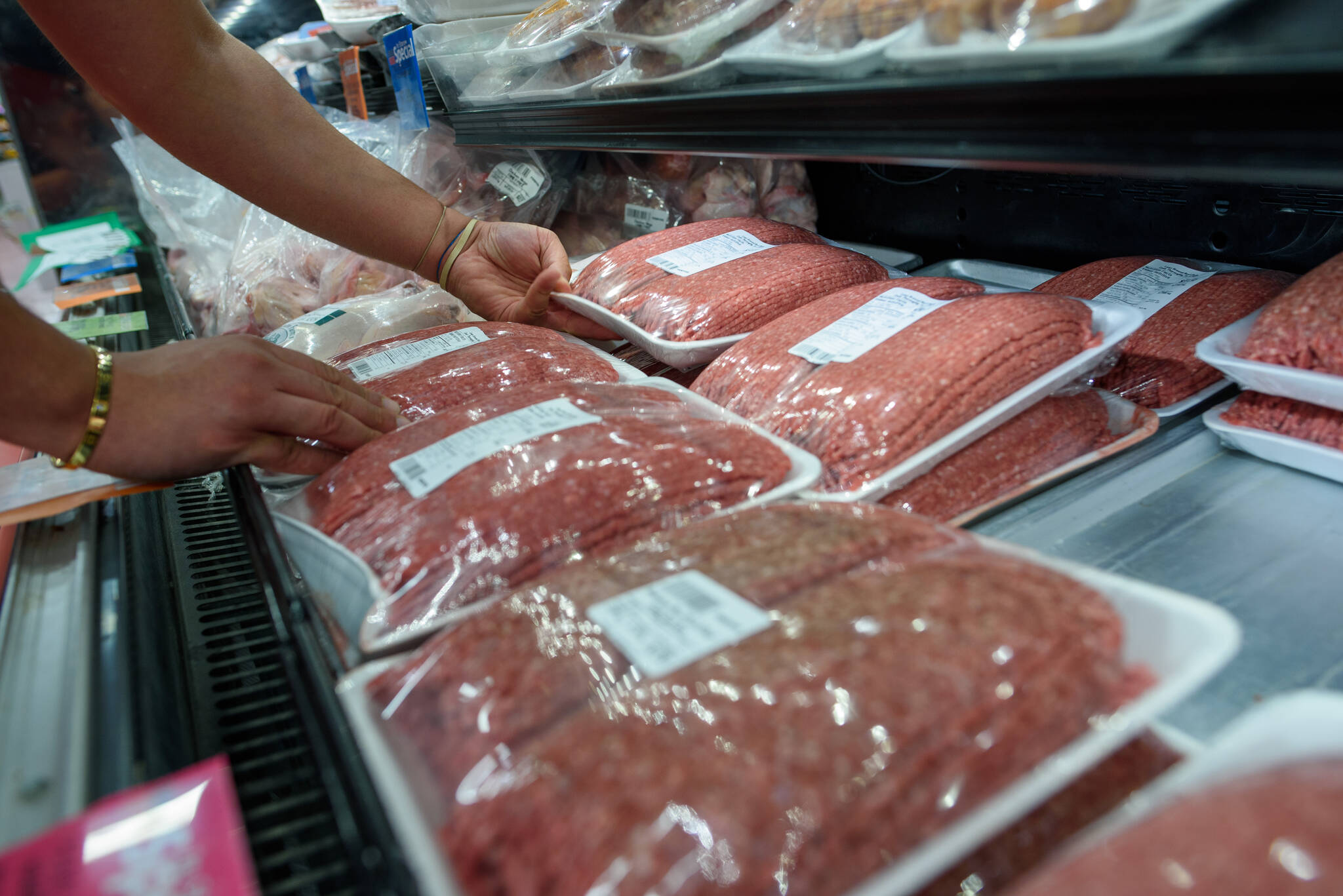

The high cost of beef has been squeezing Canadian wallets all year, and experts warn there’s little relief in sight. With cattle herds at their smallest levels in decades, both consumers and the businesses selling the meat are feeling the strain
Inside Bon Ton Meat Market in Calgary, the holiday rush is underway. But behind the counters filled with rib roasts and striploins, owner Greg Keller says the reality is tougher than it looks.
“It’s hard on everybody,” Keller said.
After decades in the butcher business, Keller is now navigating some of the steepest beef prices he’s ever faced. Beef accounts for roughly 45 per cent of his sales, and he says he’s had to lower prices where possible just to keep it accessible for customers.
“We’re fortunate we’re well established and really diverse,” he said.
“We’re withstanding it for now and seeing where it goes.”
Not enough cows, says expert
Experts say the root of the problem is simple: a shortage of cattle, and strong demand.
“We’ve got the lowest number of beef cows in Canada at any point in the last 40 years,” said Stuart Smyth, a professor in the University of Saskatchewan’s Department of Agricultural and Resource Economics.
FILE: Cattle crowd around a feeder on the Perepelkin family farm near Leslieville, Alta. THE CANADIAN PRESS/Jeff McIntosh
Severe drought across Western and Midwestern Canada has wiped out pasturelands, leaving ranchers unable to maintain their herds.
“When there’s less pasture, they can retain fewer animals on that pasture,” said Mike von Massow, a food economist at the University of Guelph.
“They either need more of it, or they need to liquidate some animals.”
Demand has also been higher, due in part to high immigration numbers to the country.
“Our supply, you know the production side of things, really hasn’t kept pace with that increase in population,” said Smyth.
Experts estimate that it will take up time for the cattle herd to rebuild, meaning beef prices are expected to remain high through next year and into 2026.
The projections mean beef may be out of financial reach for many Canadians for a while longer. Keller says some of his customers have switched to more affordable proteins altogether while others have traded down to cheaper cuts.
“You don’t have to buy the most expensive cuts. You can buy cheaper cuts and there’s ways to cook it, but they’re absolutely phenomenal,” said Keller.

Our November 2025 Issue
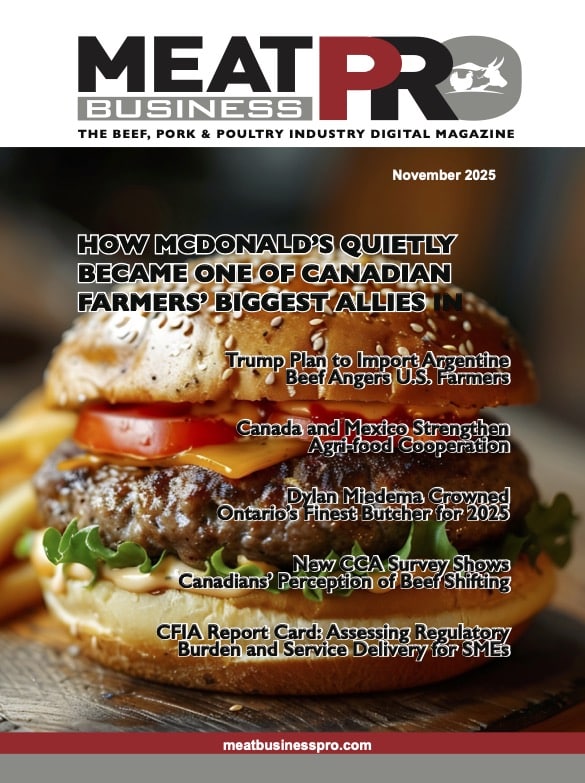
In our November 2025 issue, the DOJ beef sector investigation, McDonald’s becomes farmers big ally, Trump angers U.S. farmers, Canada Mexico agri-food deal, Ontario’s finest butcher, Beef perception shift, Global beef sustainability, and much more!